Sciences Revision - PHYSICS
Wanna a A, wanna a star, wanna a A*
Teacher's Syllabus - Topic to revise
Main Rules Current Induction
Basic Definitions
16.1 Permanent magnets
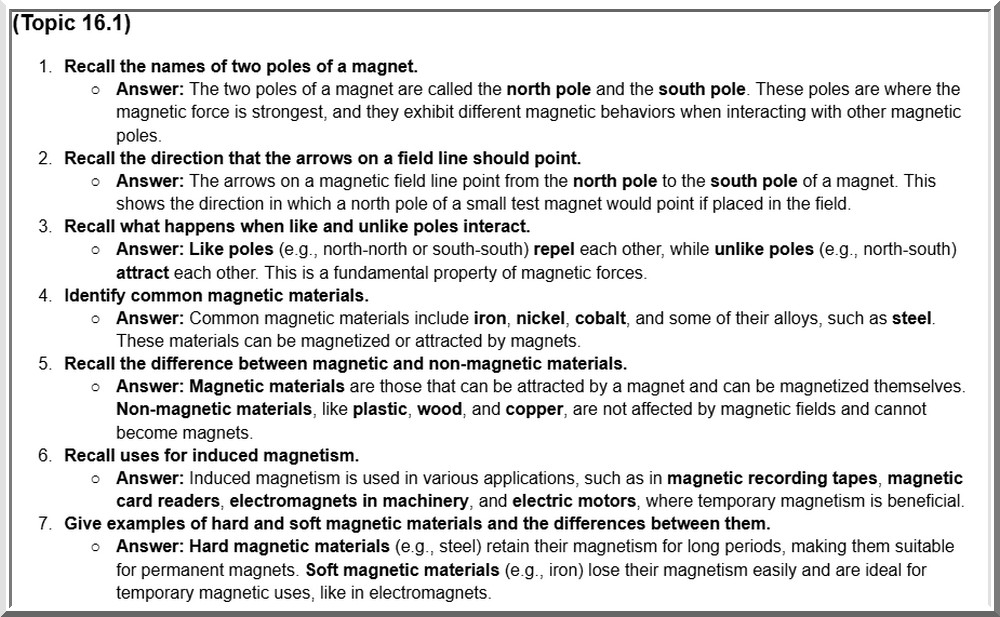
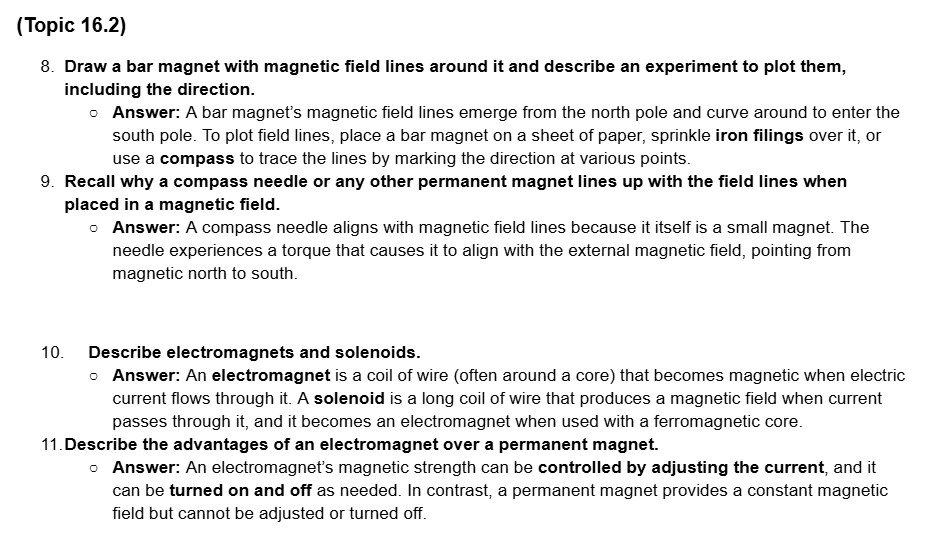
16.2 Magnetic fields
17.1 Charging and discharging
17.2 Explaining static electricity

17.3 Electric fields
18.2 Current in electric circuits
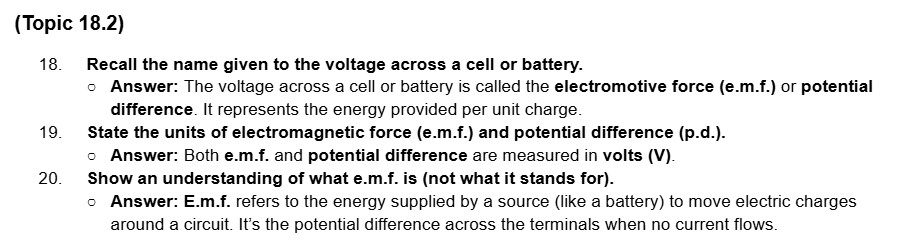
18.3 Voltage in electric circuit
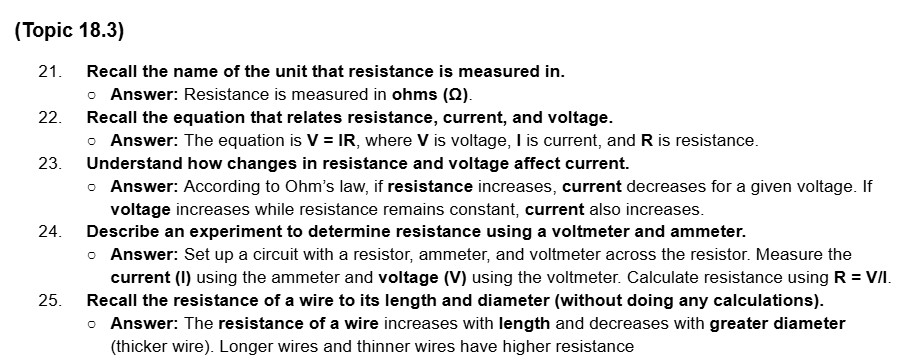
18.5 Electrical resistance
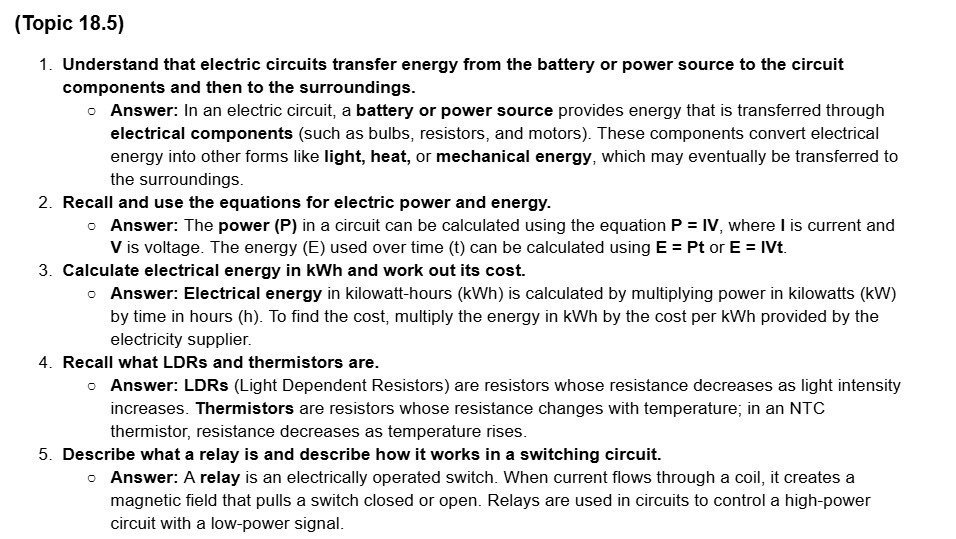
19.2 Combinations of resistors
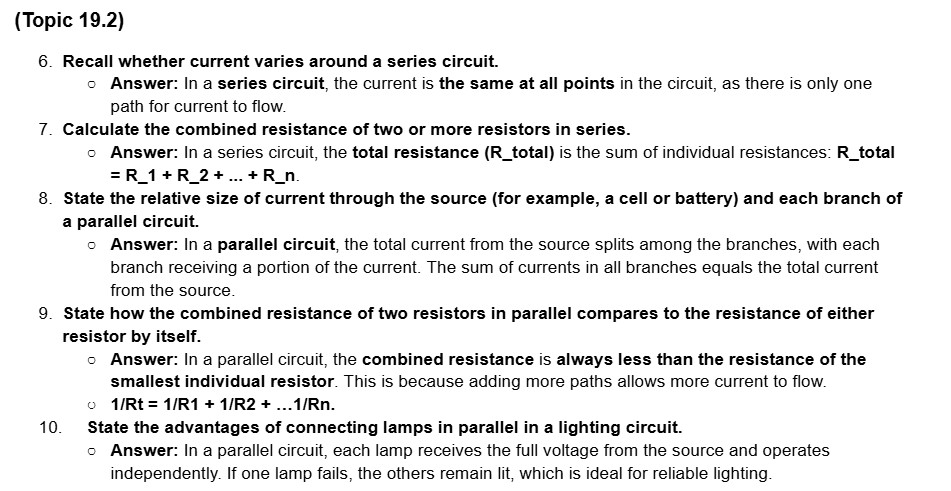
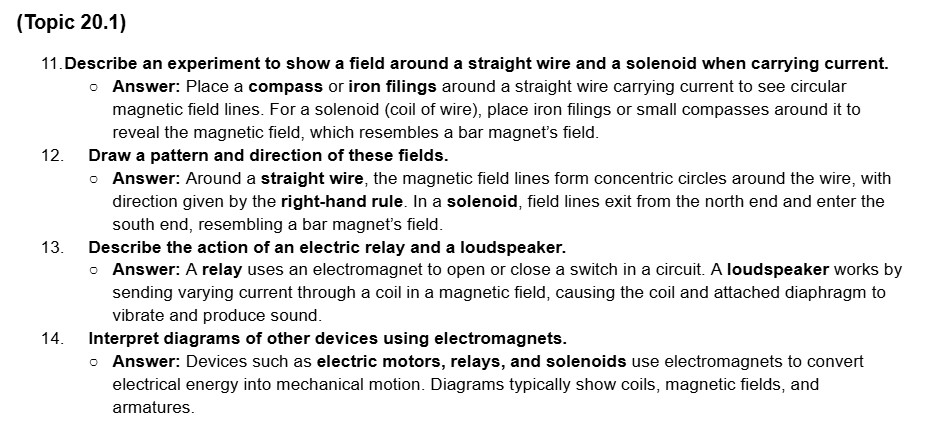
20.1 The magnetic effect of a current
20.3 Electric motors
21.1 Generating electricity
21.2 Power lines and transformers
CHARGE
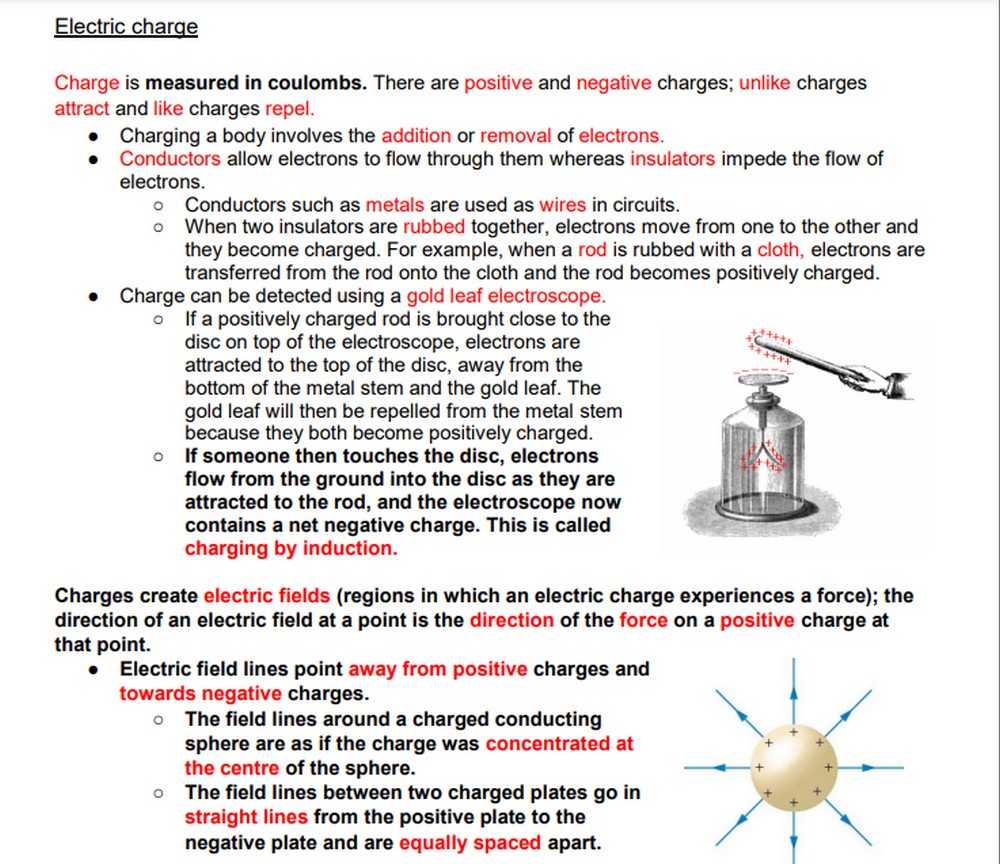
CURRENT
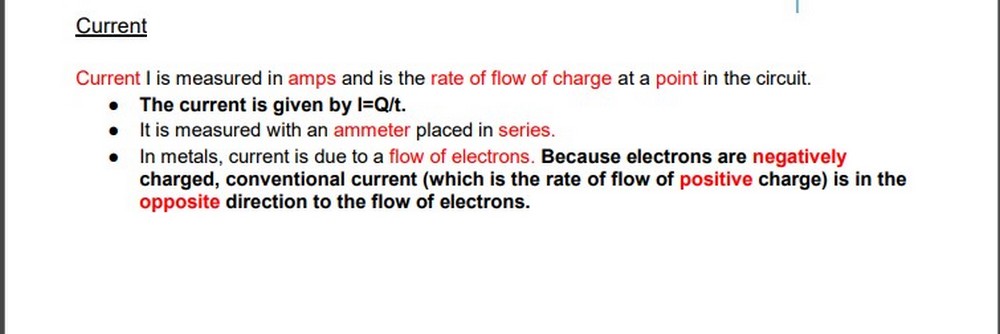
EMF - PD

RESISTANCE
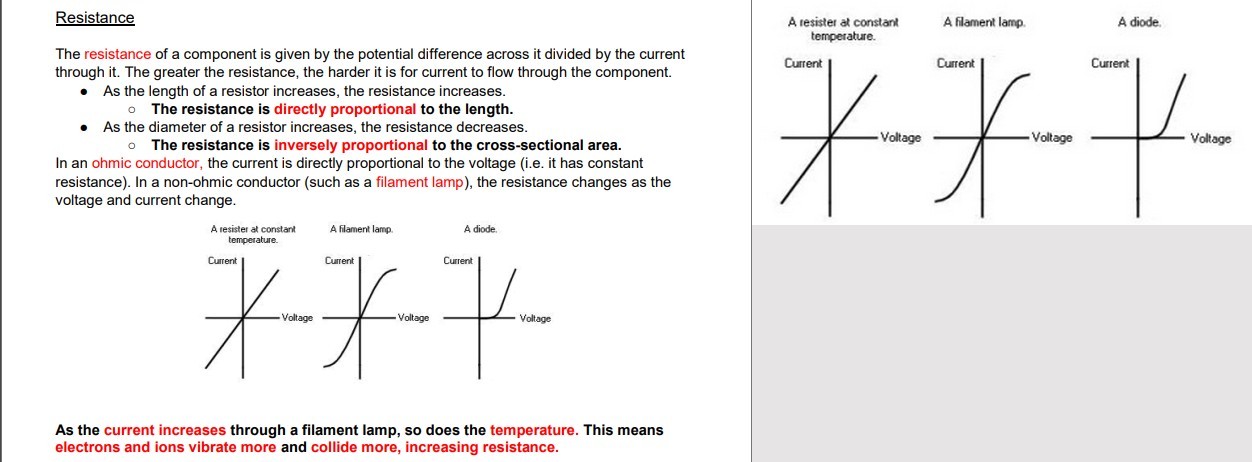
WORKING
DANGER
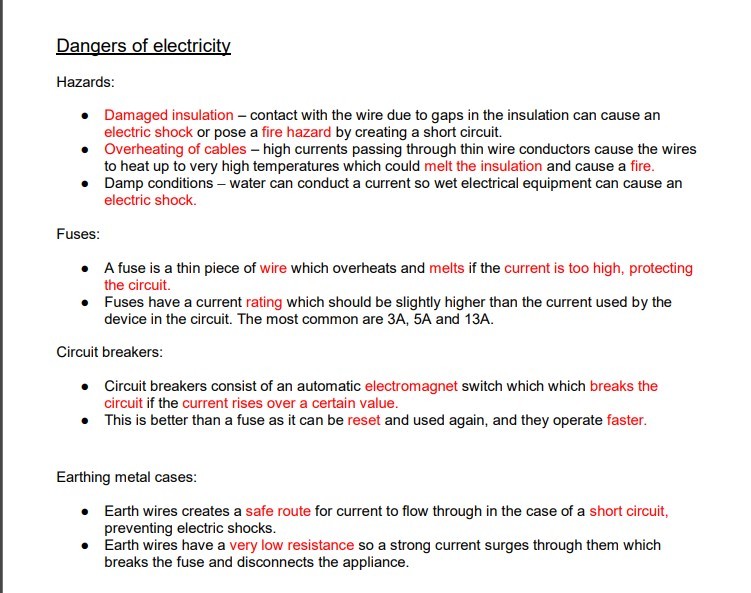
Left Hand Rule
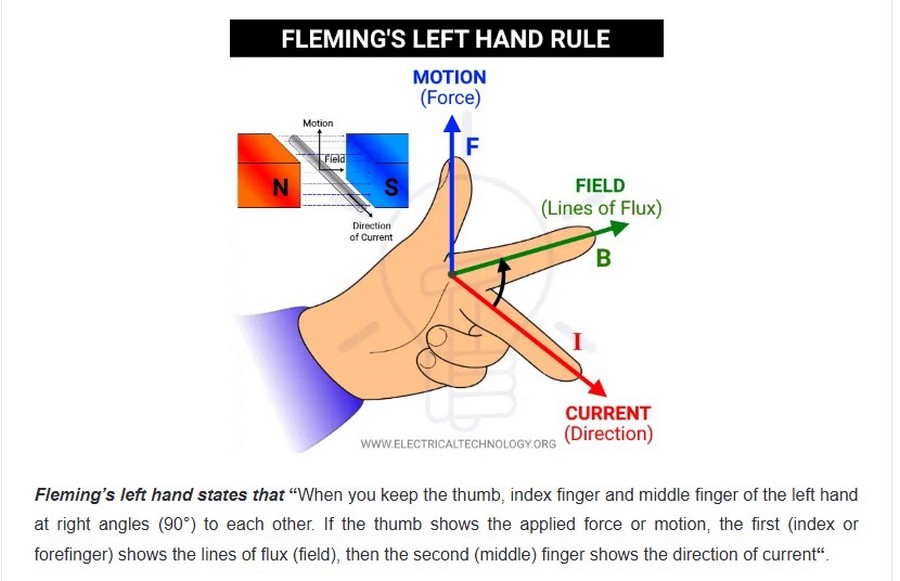
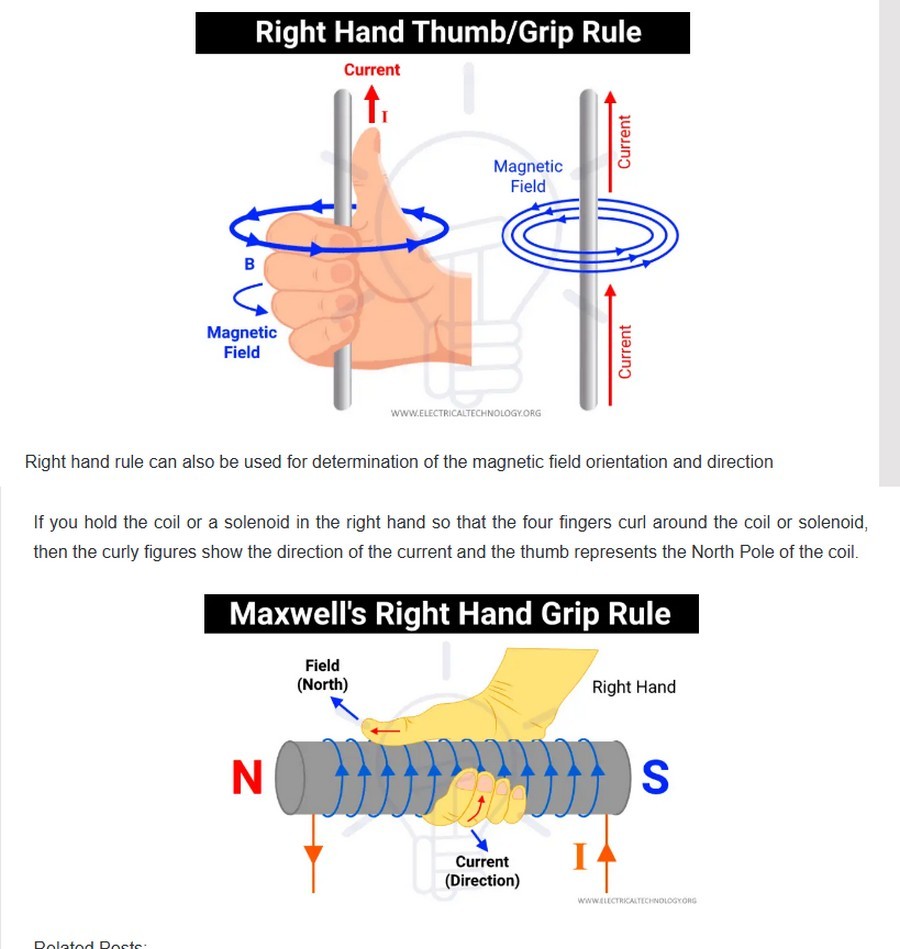
Right Hand Rulr
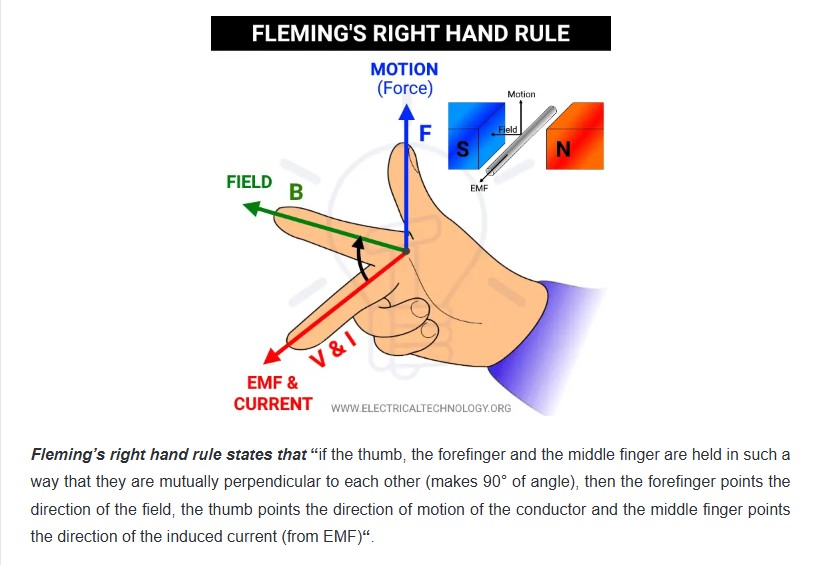
Hand Rule
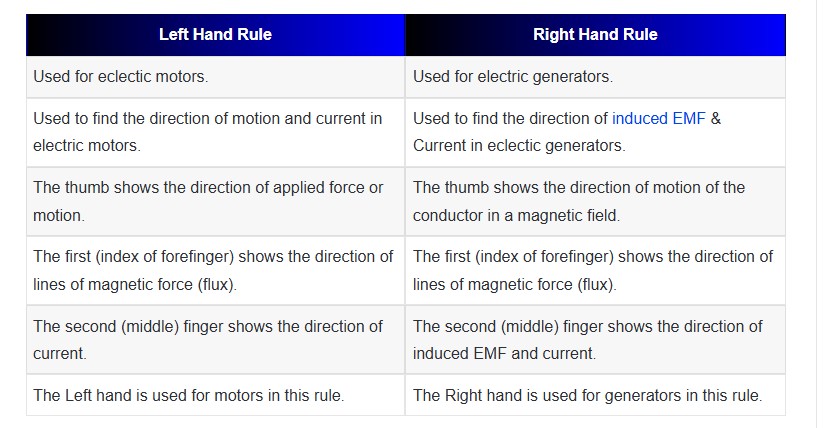
Grip Rule
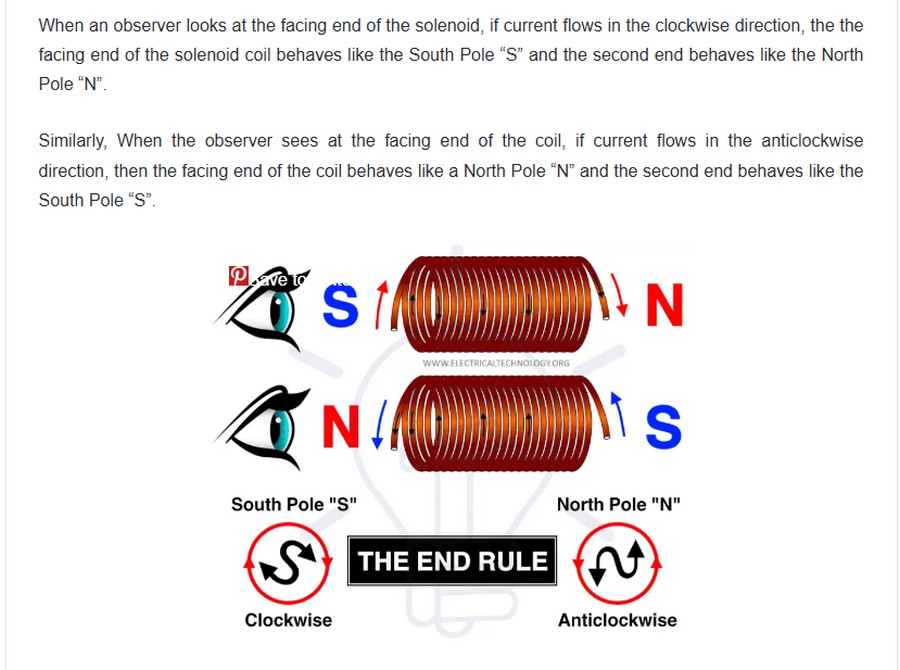
End Rule
1
What is a magnetic field?
A region where magnetic objects experience a force.
Magnetism
2
Where is a magnetic field strongest?
At the poles of a magnet.
Magnetism
3
Magnetic field strength decreases as...
Distance from the magnet increases.
Magnetism
4
Where does attraction occur?
Between opposite (unlike) poles of two magnets.
Magnetism
5
Where does repulsion occur?
Between like poles of two magnets.
Magnetism
6
Describe the key features of field lines in a magnetic diagram
●They have arrows pointing from north to south.
●The lines never touch, cross or overlap.
●The lines never touch, cross or overlap.
Magnetism
7
How is the strength of a magnet displayed in a diagram?
By the spacing of the field lines (the closer together they are, the stronger the magnet).
Magnetism
8
What do the arrows on field lines represent? (supplement)
The direction of the force that would be experienced by the north pole of a magnet placed in the field.
Magnetism
9
What is a permanent magnet?
An object which always has poles, and is therefore always magnetic.
Magnetism
10
What is an induced magnet?
A magnetic material which does not have fixed poles. They can be induced to become magnets (giving them poles) by placing them in a magnetic field, but they lose their magnetisation when the field is removed.
Magnetism
11
What is a magnetic material?
A material that is attracted to a magnet and can be magnetised.
Magnetism
12
Give examples of magnetic materials.
Iron, steel, cobalt, nickel etc.
Magnetism
13
Describe how materials are magnetised.
●Stroking them with a magnet
●Hammering them in a magnetic field
●Placing them in a coil with a direct current through it
●Hammering them in a magnetic field
●Placing them in a coil with a direct current through it
Magnetism
14
Describe how materials are demagnetised (supplement)
●Hammering
●Heating
●Placing in a coil with an AC wire
●Heating
●Placing in a coil with an AC wire
Magnetism
15
What is a magnetically hard material?
A material which can be permanently magnetised.
Magnetism
16
Give one example of a material that is magnetically hard.
Steel
Magnetism
17
What is a magnetically soft material?
A material which is only temporarily magnetised (or does not hold its magnetism very well).
Magnetism
18
Give an example of a magnetically soft material.
Soft iron.
Magnetism
19
Give an example of where electromagnets are more useful than permanent magnets.
Magnets used for moving scrap metal; they can be turned off to drop the metal where it needs to be transported to.
Magnetism
20
Describe how magnetic field shapes can be investigated.
Using plotting compasses arranged around a magnet; they will point towards the north pole, showing the direction of field lines.
Magnetism
1
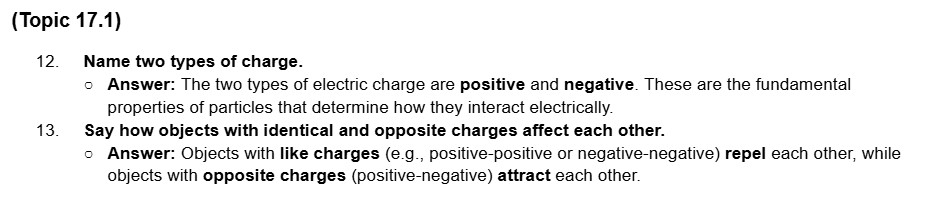
Where are electric fields found?
Around every electric charge.
Electrical Quantities
2
What is an electric field? (supplement)
A region of space in which the effects of charge can be felt. When another charge enters the field, both charges interact and experience a force.
Electrical Quantities
3
Objects with the same charge...
...repel.
Electrical Quantities
4
Objects with opposite charges...
...attract.
Electrical Quantities
5
What is charging?
The addition or removal of electrons from a material.
Electrical Quantities
6
How can charge be detected?
Using a gold leaf electroscope; the gold leaf is repelled by positive charge or attracted to negative charge.
Electrical Quantities
7
What is charging by induction? (supplement)
When a charged object is brought near to a conductor, attracting/repelling electrons in the conductor and causing a net charge to develop in the conductor as a result of electron distribution.
Electrical Quantities
8
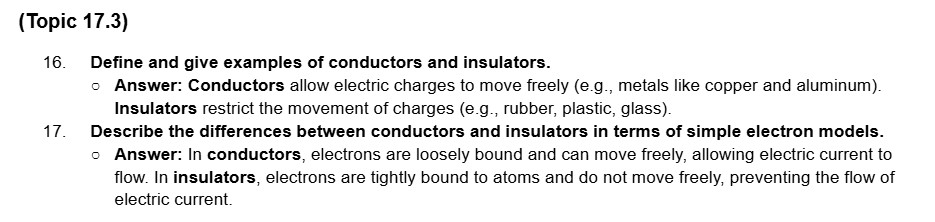
What is a conductor?
A conductor is a material which can conduct electricity; electrons are able to flow through it.
Electrical Quantities
9
What is an insulator?
An object which does not conduct electricity. Electrons cannot flow through the material.
Electrical Quantities
10
How is static electricity produced?
When two insulators are rubbed together, transferring electrons, to form a positive and a negative charge.
Electrical Quantities
11
What is an electric current?
Current is the rate of flow of charge in an electric circuit.
Electrical Quantities
12
What is required in order for a charge/current to flow?
●A potential difference ●A closed circuit
Electrical Quantities
13
Describe the value of current across a circuit.
Current is the same at any point in a closed series circuit. Current is split between the branches of a parallel circuit.
Electrical Quantities
14
Give an equation linking charge and current, giving SI units (supplement)
charge (C) = current (A) x time (s)
Electrical Quantities
15
How is current measured?
Using an ammeter, wired in series to the circuit.
Electrical Quantities
16
What is conventional current? (supplement)
Conventional current (used in circuit diagrams etc.) represents the flow of positive charge; it flows in the opposite direction to the flow of electrons.
Electrical Quantities
17
What is EMF?
Electromotive force (the voltage supplied by a power source).
Electrical Quantities
18
What are the units of EMF?
Volts, V.
Electrical Quantities
19
Define EMF in terms of energy (supplement)
The energy supplied by the source per unit charge around the circuit.
Electrical Quantities
20
What are the units of potential difference?
Volts, V.
Electrical Quantities
21
Define potential difference (supplement)
The work done per unit charge flowing between any two points.
Electrical Quantities
22
How is potential difference measured?
Using a voltmeter, wired in parallel.
Electrical Quantities
23
What is 1V equivalent to? (supplement)
1 Joule per Coulomb (1 JC⁻¹)
Electrical Quantities
24
Give an equation linking current and voltage, giving all SI units
p.d. (V) = current (A) x resistance (𝝮)
Electrical Quantities
25
How does resistance affect the current flowing through a circuit?
The larger the total resistance in the circuit, the smaller the current will be.
Electrical Quantities
26
Describe an experiment to investigate the resistance of a wire.
●Use a length of wire connected to an ammeter (in series), a voltmeter (in parallel) and a power supply
●Connect two crocodile clips to the wire, one at each end, and record the current and voltage
●Vary the length of the wire (moving one of the clips), recording V and I
●Plot a graph of V against I; the gradient = resistance of wire
Electrical Quantities
27
How does resistance relate to the length of a wire?
Resistance increases with length. R ∝ L
Electrical Quantities
28
How does resistance relate to the cross sectional area of a wire?
Resistance decreases as cross sectional area increases (they are inversely proportional). R ∝ 1/A
Electrical Quantities
29
How is energy transferred in a circuit?
From the battery/power source to the circuit components, and dissipated into the surroundings as heat.
Electrical Quantities
30
What factors affect the energy transferred when charge flows through a component?
●Amount of charge ●The potential difference across the component
Electrical Quantities
31
Give an equation linking power and potential difference, giving all SI units (supplement)
power (W) = current (A) x p.d. (V)
Electrical Quantities
32
Give an equation linking power and energy, giving all SI units (supplement)
power (W) = energy (J) ÷ time (s)
This means that E = VIt
Electrical Quantities
1
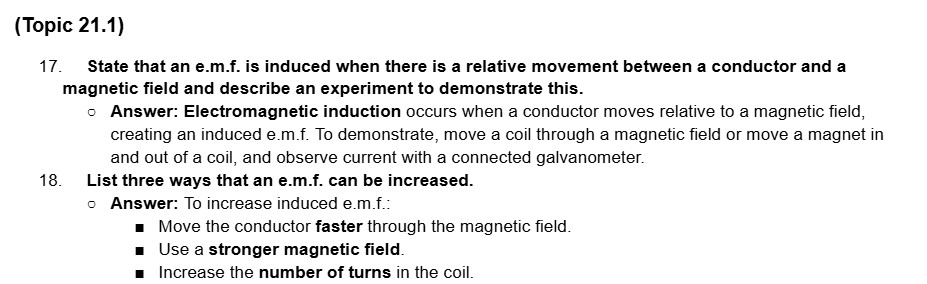
What is electromagnetic induction?
The production of a potential difference caused by relative movement between a conductor and a magnetic field.
Electromagnetic Effects
2
In what direction is the potential difference induced? (supplement)
In the opposite direction to the movement which produced it.
Electromagnetic Effects
3
When is a current produced?
When the ends of the coil are connected to a complete circuit.
Electromagnetic Effects
4
How can you increase the induced EMF?
- Moving the wire more quickly
- Increasing the length of wire
- Using a stronger magnetic field
- Increasing the length of wire
- Using a stronger magnetic field
Electromagnetic Effects
5
How can you work out the direction of the induced current? (supplement)
Using Fleming's right hand rule.
Electromagnetic Effects
5-1
How are electrical generators set up?
In the same way as a motor, with a
rectangular loop of wire between
permanent magnets. The main
difference is the presence of a turbine to
spin the coil.
Electromagnetic Effects
6
Describe how an electrical generator works
●A turbine spins the coil of wire between the magnets.
●The wire cuts through the magnetic field, experiencing a changing magnetic field.
●A potential difference is induced.
●A current is produced.
●The wire cuts through the magnetic field, experiencing a changing magnetic field.
●A potential difference is induced.
●A current is produced.
Electromagnetic Effects
7
What kind of current is produced by an ordinary generator?
An alternating current.
Electromagnetic Effects
8
How does a split ring commutator work? (supplement)
It disconnects and reconnects the wires every half rotation, switching the current so the motor spins continuously.
Electromagnetic Effects
9
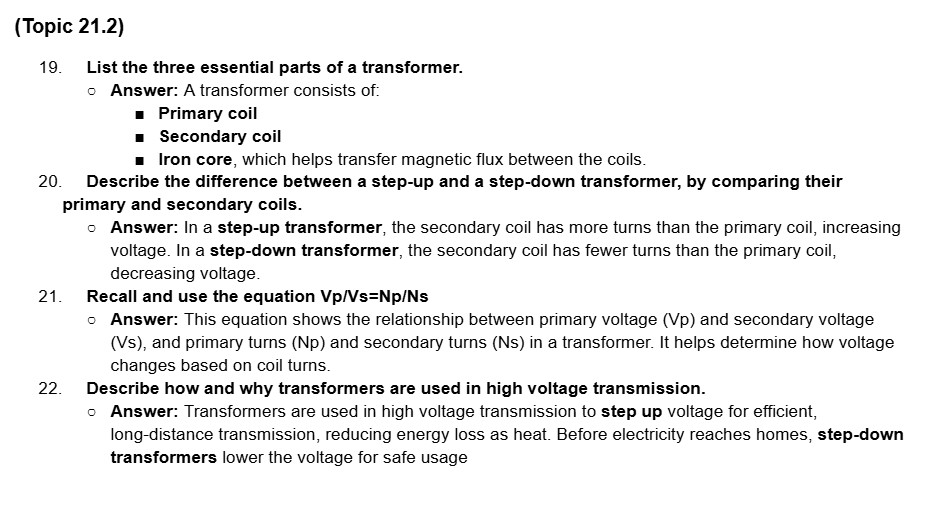
How do transformers work?
●An alternating current flows through the primary coil, producing an alternating magnetic field.
●This causes the secondary coil to experience a changing magnetic field, inducing a potential difference, which produces an alternating current in the secondary coil.
●This causes the secondary coil to experience a changing magnetic field, inducing a potential difference, which produces an alternating current in the secondary coil.
Electromagnetic Effects
10
Why do step up transformers increase voltage?
There are more coils experiencing the change, so a larger p.d. is induced.
Electromagnetic Effects
11
State one assumption used in transformer calculations (supplement)
The transformer is 100% efficient (the power is assumed to be the same in both coils).
Electromagnetic Effects
12
What is produced around a current carrying wire?
A magnetic field.
Electromagnetic Effects
12-1
Give the transformer equations linking
number of coils, p.d. and current
N1 / N2 = V1 / V2 = I2 / I1
Electromagnetic Effects
13
How can you determine the direction of a magnetic field around a wire?
Using the Right Hand Grip Rule. Produce a thumbs-up shape with your right hand and point your thumb in the direction of the flow of current. The field lines wrap around in the direction of your fingers.
Electromagnetic Effects
14
What is a solenoid?
A coil of wire with a magnetic field, which can be used as an electromagnet.
Electromagnetic Effects
15
How does coiling a wire affect the magnetic field?
It increases the field strength, as the magnetic fields of each turn of wire are added together.
Electromagnetic Effects
16
How can you increase the strength of a solenoid magnet?
●Using an iron core to carry field lines (as they travel more easily through metal than air)
●Increase the number of turns in the coil
●Increase the current
●Increase the number of turns in the coil
●Increase the current
Electromagnetic Effects
17
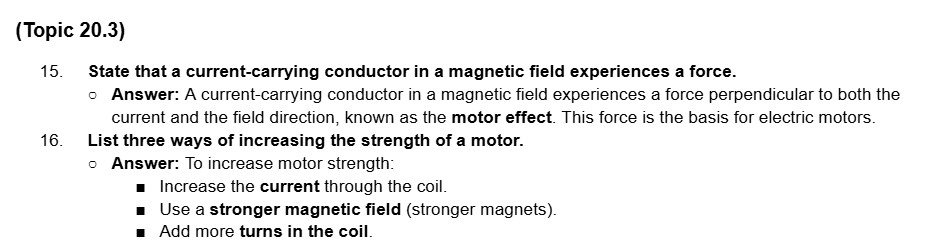
What is the motor effect?
If a current-carrying wire is placed in a magnetic field it experiences a force, pushing the wire out of/away from the field.
Electromagnetic Effects
17-1
Describe the mechanism of the motor effect
● When a current-carrying wire produces a magnetic field within the field of a permanent magnet, the two fields interact.
● The wire experiences a force pushing it away from the magnetic field, at right angles to the direction of the permanent field and the current.
Electromagnetic Effects
18
How can you predict the direction of the motor effect? (supplement)
Using Fleming's left hand rule.
Thumb = Movement
First finger = Field
Second finger = Current
Thumb = Movement
First finger = Field
Second finger = Current
Electromagnetic Effects
19
What is conventional current? (supplement)
A model for current which flows in the opposite direction to electrons. Conventional current flows from positive to negative.
Electromagnetic Effects
20
Which factors affect the strength of the motor force?
●The length of wire placed in the field
●The current in the wire
●The strength of the permanent field
●The current in the wire
●The strength of the permanent field
Electromagnetic Effects
1
What is Average velocity?
Definition: Average velocity (ms⁻¹) is the displacement (m) divided by the time (s) taken.
Formula: v = s/t (ms⁻¹)
General Physics
2
What is Average speed?
Definition: Average speed (ms⁻¹) is the distance (m) traveled divided by the time (s) taken.
Formula: s = d/t (ms⁻¹)
General Physics
3
What is Acceleration?
Definition: Acceleration (ms⁻²) is the change in velocity (ms⁻¹) divided by the time (s) taken.
Formula: a = (v - u) / t (ms⁻²)
General Physics
4
What is Weight?
Definition: Weight (N) is the product of mass (kg) and gravitational field strength (ms⁻²).
Formula: W = mg (N)
General Physics
5
What is Force?
Definition: Force (N) is the product of mass (kg) and acceleration (ms⁻²).
Formula: F = ma (N)
General Physics
6
What is Density?
Definition: Density (kgm⁻³) is the mass (kg) divided by the volume (m³).
Formula: ρ = m/V (kgm⁻³)
General Physics
7
What is Hooke's Law?
Definition: Hooke's Law states that the force (N) is the product of the spring constant (Nm⁻¹) and the extension (m).
Formula: F = kx (N)
General Physics
8
What is Pressure?
Definition: Pressure (Pa) is the force (N) applied per unit area (m²).
Formula: P = F/A (Pa)
General Physics
9
What is Fluid Pressure?
Definition: Fluid Pressure (Pa) is the product of density (kgm⁻³), gravitational field strength (ms⁻²), and height (m).
Formula: P = ρgh (Pa)
General Physics
10
What is Work?
Definition: Work (J) is the product of force (N) and distance moved (m).
Formula: W = Fd (J)
General Physics
11
What is Power?
Definition: Power (W) is the work (J) done per unit time (s).
Formula: P = W/t (W)
General Physics
12
What is Kinetic Energy?
Definition: Kinetic Energy (J) is half the product of mass (kg) and the square of velocity (ms⁻¹).
Formula: KE = 1/2 mv² (J)
General Physics
13
What is Gravitational Potential Energy?
Definition: Gravitational Potential Energy (J) is the product of mass (kg), gravitational field strength (ms⁻²), and height (m).
Formula: GPE = mgh (J)
General Physics
14
What is Efficiency?
Definition: Efficiency (%) is the ratio of useful power output (W or J) to total power input (W or J), multiplied by 100.
Formula: η = (P_out / P_in) × 100%
General Physics
15
What is Moment?
Definition: Moment (Nm) is the product of force (N) and the perpendicular distance from the pivot (m).
Formula: M = Fd (Nm)
General Physics
16
What is the relationship between clockwise and anticlockwise moments?
Definition: The sum of clockwise moments (Nm) is equal to the sum of anticlockwise moments (Nm).
Formula: F₁d₁ = F₂d₂ (Nm)
General Physics
17
What is Momentum?
Definition: Momentum (kgms⁻¹) is the product of mass (kg) and velocity (ms⁻¹).
Formula: p = mv (kgms⁻¹)
General Physics
18
What is Impulsive Force?
Definition: Impulsive Force (N) is the change in momentum (kgms⁻¹) divided by the time (s).
Formula: F = Δp/t (N)
General Physics
19
What is Impulse?
Definition: Impulse (kgms⁻¹ or Ns) is the change in momentum (kgms⁻¹).
Formula: Δp = mv - mu (kgms⁻¹)
General Physics
20
What is Boyle's Law?
Definition: Boyle's Law states that the product of pressure (Pa) and volume (m³) is constant at a constant temperature.
Formula: P₁V₁ = P₂V₂ (Pa·m³)
Thermal Physics
21
What is the formula for Energy in terms of mass, specific heat capacity, and temperature change?
Definition: Energy (J) is the product of mass (kg), specific heat capacity (Jkg⁻¹°C⁻¹), and temperature change (°C).
Formula: Q = mcθ (J)
Thermal Physics
22
What is Wave Speed?
Definition: Wave Speed (ms⁻¹) is the product of frequency (Hz) and wavelength (m).
Formula: V = f ƛ (ms⁻¹)
Waves
23
What is Frequency?
Definition: Frequency (Hz) is the reciprocal of the period (s).
Formula: F = 1/T (Hz)
Waves
24
What is the Refractive Index in terms of the angle of incidence and refraction?
Definition: Refractive Index is the ratio of the sine of the angle of incidence to the sine of the angle of refraction.
Formula: n = sin(i) / sin(r)
Waves
25
What is the Refractive Index in terms of the speed of light?
Definition: Refractive Index is the ratio of the speed of light in vacuum to the speed of light in a material.
Formula: n = c/v
Waves
26
What is the Refractive Index in terms of the critical angle?
Definition: Refractive Index is the reciprocal of the sine of the critical angle.
Formula: n = 1 / sin(c)
Waves
27
What is Current?
Definition: Current (A) is the charge (C) per unit time (s).
Formula: I = Q/t (A)
Electricity and Magnetism
28
What is Voltage in terms of energy transferred?
Definition: Voltage (V) is the energy transferred (J) per unit charge (C).
Formula: V = W/Q (V)
Electricity and Magnetism
29
What is Voltage in terms of current and resistance?
Definition: Voltage (V) is the product of current (A) and resistance (Ω).
Formula: V = IR (V)
Electricity and Magnetism
30
What is Power in terms of current and voltage?
Definition: Power (W) is the product of current (A) and voltage (V).
Formula: P = IV (W)
Electricity and Magnetism
31
What is Power in terms of current squared and resistance?
Definition: Power (W) is the product of current squared (I²) and resistance (Ω).
Formula: P = I²R (W)
Electricity and Magnetism
32
What is Energy Transferred in terms of current, voltage, and time?
Definition: Energy Transferred (J) is the product of current (A), voltage (V), and time (s).
Formula: W = IVt (J)
Electricity and Magnetism
33
What is Energy Transferred in terms of power and time?
Definition: Energy Transferred (J) is the product of power (W) and time (s).
Formula: W = Pt (J)
Electricity and Magnetism
34
What is the Total Resistance for resistors in series?
Definition: Total Resistance (Ω) for resistors in series is the sum of individual resistors (Ω).
Formula: R_total = R₁ + R₂ + R₃ + ... + Rₚ (Ω)
Electricity and Magnetism
35
What is the Total Resistance for resistors in parallel?
Definition: The reciprocal of Total Resistance (Ω) for resistors in parallel is the sum of the reciprocals of individual resistors (Ω).
Formula: 1/R_total = 1/R₁ + 1/R₂ + ... + 1/Rₚ (Ω⁻¹)
Electricity and Magnetism
36
What is Resistance in terms of resistivity, length, and area?
Definition: Resistance (Ω) is the product of resistivity (Ωm) and length (m), divided by the area (m²).
Formula: R = ρl/A (Ω)
Electricity and Magnetism
37
What is the relationship between voltage in the secondary and primary coils of a transformer in terms of turns?
Definition: The ratio of voltage in the secondary coil (V) to voltage in the primary coil (V) is equal to the ratio of turns on the secondary coil to turns on the primary coil.
Formula: Vₑ/Vₚ = Nₑ/Nₚ
Electricity and Magnetism
38
What is the relationship between voltage in the secondary and primary coils of a transformer in terms of current?
Definition: The ratio of voltage in the secondary coil (V) to voltage in the primary coil (V) is equal to the ratio of current in the secondary coil (A) to current in the primary coil (A).
Formula: Vₑ/Vₚ = Iₑ/Iₚ
Electricity and Magnetism
39
What is Alpha Decay?
Definition: Alpha Decay is the process where an alpha particle (He nucleus) is emitted from a nucleus.
Formula: ²³⁸₉₂U → ²³⁴₉₀Th + ⁴₂He
Nuclear Physics
40
What is Beta Decay?
Definition: Beta Decay is the process where a beta particle (electron) is emitted from a nucleus.
Formula: ²³⁴₉₀Th → ²³⁴₉1Pa + ⁰₋₁e
Nuclear Physics
41
What is Gamma Decay?
Definition: Gamma Decay is the process where a gamma photon is emitted from a nucleus.
Formula: ⁴₃X → ⁴₃Y + γ
Nuclear Physics
42
What is Average Orbital Speed?
Definition: Average Orbital Speed (ms⁻¹) is the product of 2π and the average radius of the orbit (m), divided by the orbital period (s).
Formula: v = 2πr/T (ms⁻¹)
Space Physics
43
What is the relationship between the distance of a far galaxy and its speed away from us?
Definition: The distance (m) of a far galaxy divided by its speed away from us (ms⁻¹) is equal to the reciprocal of the Hubble Constant (s⁻¹).
Formula: d/v = 1/H₀ (s)
Space Physics